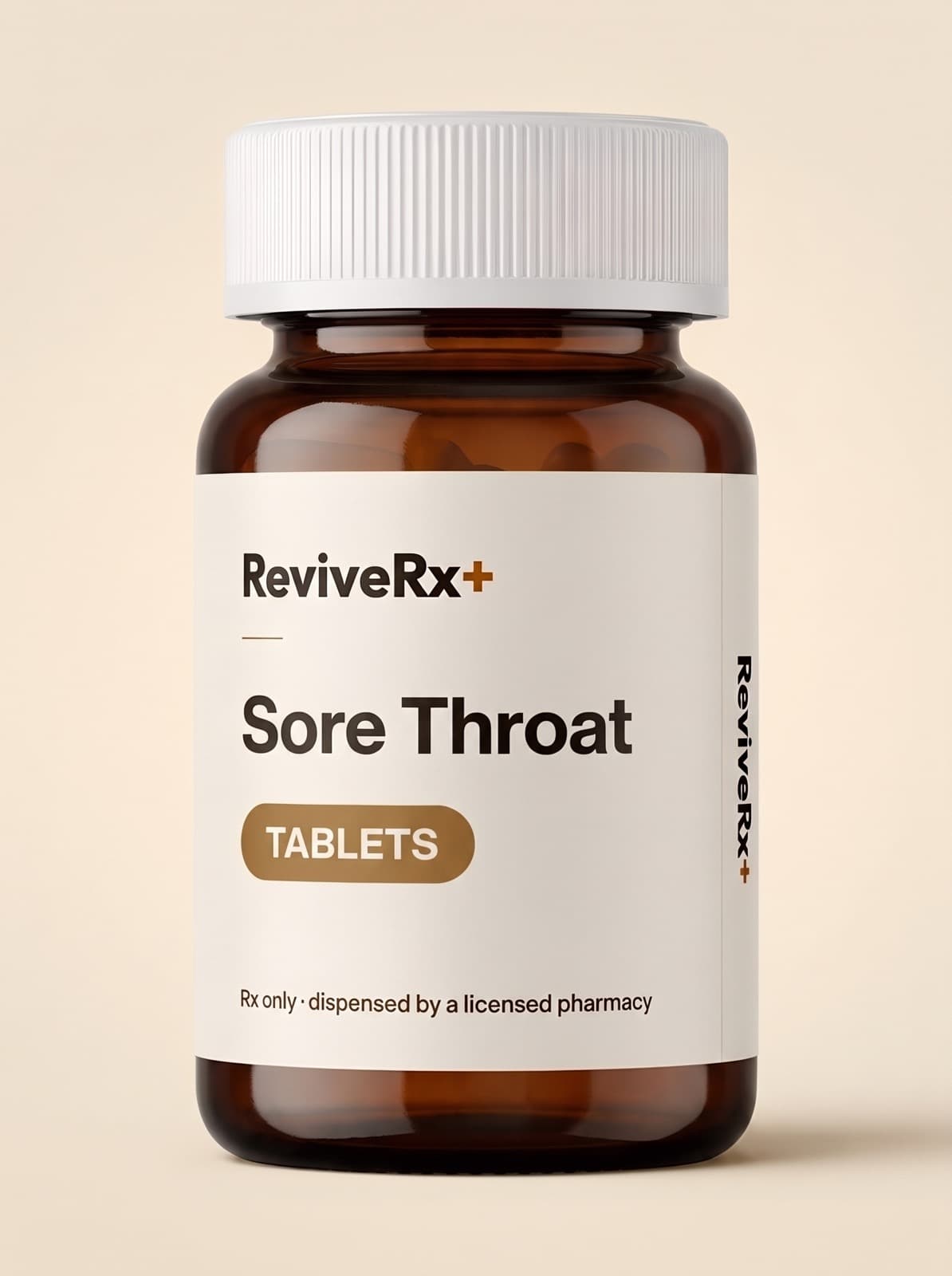
 FDA-approved medication
Sore Throat & Pharyngitis Treatment (antibiotic or symptom relief as prescribed)
Prescription — short course; antibiotic only where a provider judges it warranted
Most sore throats are viral; a provider decides whether yours needs an antibiotic, and what ships.
$109 One-time supply $32 consultation included, not refunded · medication and shipping if prescribed
Choose your option
One-time supply
Price
$109 for this supply, if prescribed
Includes your $32 provider consultation (non-refundable). If your provider decides treatment isn’t appropriate, the medication portion is refunded automatically.
- Not available in California or South Carolina.
Paying books a visit with a licensed provider, who decides whether to prescribe and which strength is appropriate. If nothing is prescribed, the medication portion is refunded automatically; a higher strength costs more only if you approve that charge.
How it works
FDA-approved for the indications this package covers — penicillin V, amoxicillin, cephalexin and azithromycin for pharyngitis caused by Streptococcus pyogenes, and ibuprofen, naproxen and viscous lidocaine for the pain. Prescribed by a licensed provider only if appropriate for you.
A sore throat is inflammation of the pharynx, and in adults the cause is usually a virus — the same ones behind colds — for which no antibiotic does anything. The bacterial cause that matters is group A Streptococcus, because treating it shortens the illness, reduces spread and lowers the small risk of rheumatic fever. Providers separate the two by pattern: fever, swollen tonsils with white patches, tender glands at the front of the neck and no cough point towards strep; a runny nose, cough and hoarseness point towards a virus. Where strep is likely, penicillin V and amoxicillin bind the enzymes bacteria use to build their cell wall, so the wall fails and the bacterium ruptures; cephalexin does the same by a related route for people with a mild penicillin allergy; azithromycin binds the bacterial ribosome and stops protein synthesis, kept in reserve for true penicillin allergy because streptococcal resistance to it is rising. For the pain itself, ibuprofen and naproxen block the prostaglandins behind swelling and fever, and viscous lidocaine blocks the sodium channels in nerve endings in the throat so swallowing hurts less. The provider's first decision is whether an antibiotic belongs in your plan at all.
The full mechanismWho it’s for
A provider may consider it when
- A painful throat with fever, swollen glands or white patches on the tonsils and no cough — the pattern that makes strep likely
- A sore throat that is stopping you eating and drinking comfortably, and over-the-counter relief has not helped
- You want a provider to tell you honestly whether this needs an antibiotic or just time and pain relief
Reasons it may not be prescribed
- Trouble breathing or swallowing, drooling, a muffled voice, inability to open your mouth fully, or a stiff neck with fever — call 911 or go to an emergency department; these can signal a deep-neck or throat-space infection
- Severe pain and swelling on one side of the throat, or a fever over 103°F — a peritonsillar abscess needs to be examined and possibly drained in person
- A sore throat with a widespread rash, or symptoms lasting more than seven to ten days, or extreme fatigue with swollen glands at the back of the neck — mononucleosis and other causes need an in-person assessment, and amoxicillin given in mono commonly causes a rash
- A known allergy to penicillins, cephalosporins, macrolides, NSAIDs or lidocaine — a hard stop for that medication; a severe penicillin allergy narrows the options and the provider needs the details
- Pregnancy, kidney disease, a history of stomach bleeding, or a heart rhythm problem — some of these medications are excluded and the provider needs to know
- Under 18 — online treatment here is for adults
These are the same checks your provider runs in the visit. If one applies, they will tell you plainly — and the medication portion of what you paid comes back automatically.
What to expect
After your visit
If prescribed, the medication ships to you from the partner pharmacy — the price you paid covers the consultation and the medication. If the provider decides an antibiotic is not warranted, they may ship pain relief alone or recommend over-the-counter care; whatever is not prescribed is refunded from the medication portion. The consultation fee is not.
Days 1–3
With strep, pain and fever typically ease within a day or two of starting the antibiotic — finish the whole course regardless. With a viral sore throat, pain relief does its job while the illness runs three to seven days.
If it is not settling
Pain worsening on one side, difficulty swallowing, or fever past day three on an antibiotic are the signals for in-person care.
Important safety information
Penicillin, amoxicillin and cephalexin: nausea, diarrhea and rash; a serious allergic reaction — hives, facial swelling, wheeze — is an emergency. Azithromycin: stomach upset, and it can prolong the heart's QT interval, which matters with certain other medications or heart conditions. Any antibiotic can cause Clostridioides difficile diarrhea, during or weeks after the course. Ibuprofen and naproxen: stomach upset, and a risk of bleeding, kidney strain and cardiovascular events that rises with dose and duration. Viscous lidocaine: numbness that makes swallowing clumsy — do not eat for an hour after using it, and never exceed the prescribed dose.
- Shulman ST, Bisno AL, Clegg HW, et al. Clinical Practice Guideline for the Diagnosis and Management of Group A Streptococcal Pharyngitis: 2012 Update by the Infectious Diseases Society of America. Clin Infect Dis. 2012;55(10):e86–e102 — test before treating; penicillin or amoxicillin first-line; macrolides for penicillin allergy
- Harris AM, Hicks LA, Qaseem A. Appropriate Antibiotic Use for Acute Respiratory Tract Infection in Adults. Ann Intern Med. 2016;164(6):425–434 — test for streptococcal pharyngitis only in patients with symptomatic features; treat only confirmed cases
- FDA prescribing information (DailyMed): amoxicillin; penicillin V potassium; cephalexin; azithromycin; ibuprofen; naproxen; lidocaine hydrochloride oral topical solution (viscous) — indications, warnings, adverse reactions; current labels as of 2026
Complete safety information is provided during your visit and with every prescription. This page is a summary, not a substitute for your provider's advice.
Questions
Will I definitely be prescribed this?
No. A consultation does not guarantee a prescription — and with a sore throat, the provider's first job is deciding whether an antibiotic is warranted at all. Most adult sore throats are viral, guidelines ask that antibiotics be reserved for confirmed or strongly suspected strep, and the provider may recommend testing at a local clinic or pharmacy before treating. If they decline the antibiotic, the medication portion of your payment for it is refunded; the consultation fee is not.
Can the provider diagnose strep over video?
They can judge how likely it is from your symptoms and, where you can share one, a photo of your throat; a rapid strep test or culture is the only way to confirm it. The guideline standard is to test before treating, so the provider may ask you to get a test locally rather than prescribe on suspicion alone. That is the honest answer, and it is how they avoid giving antibiotics to the majority whose sore throat is viral.
Why penicillin and not something newer?
Because group A strep has never developed resistance to penicillin, it is narrow-spectrum, and the guideline names penicillin or amoxicillin as first choice. Azithromycin is held back for true penicillin allergy precisely because strep resistance to it is increasing.
Also for urgent care
$32 consultation included, not refunded · medication and shipping if prescribed
See whether Sore Throat & Pharyngitis Treatment (antibiotic or symptom relief as prescribed) is right for you.
A licensed provider reviews your visit and decides. You receive medication only if prescribed, and that portion of your payment is refunded automatically if they say no.