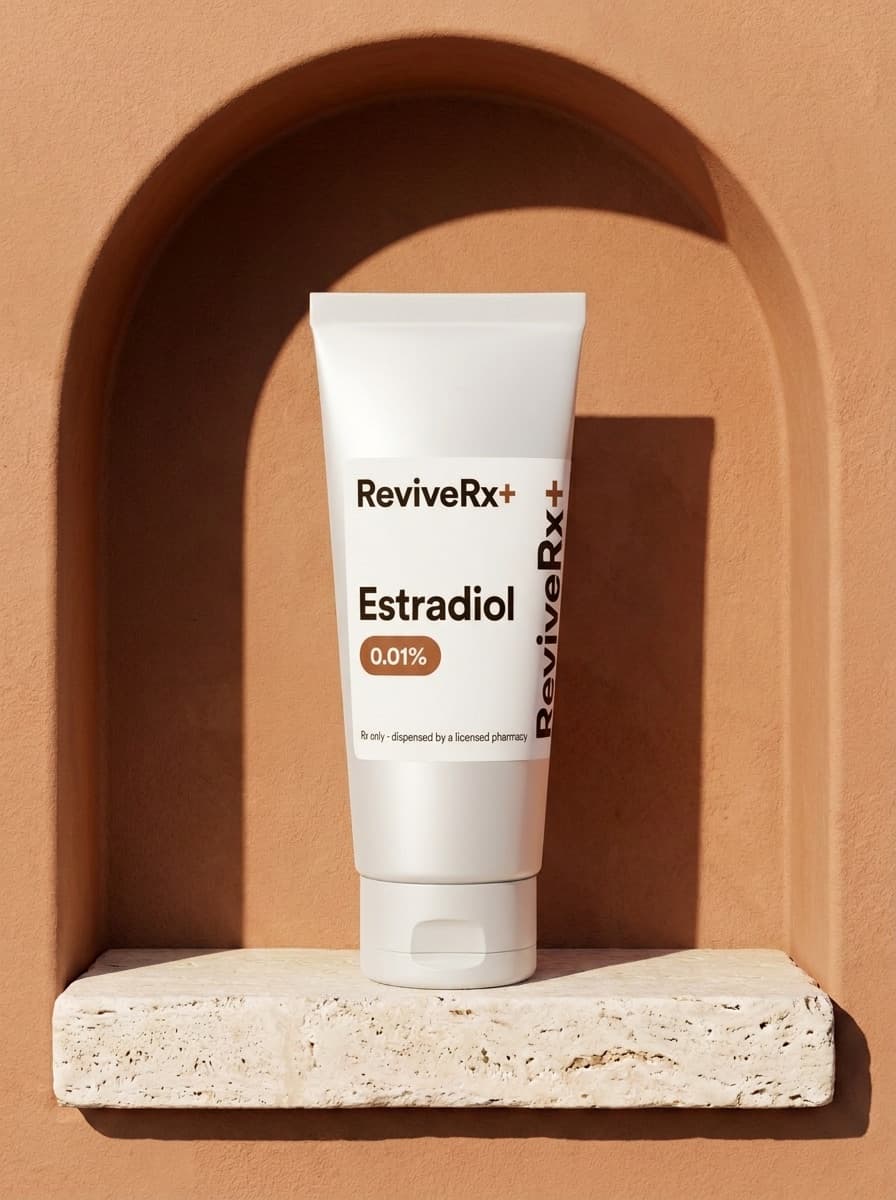
Estradiol
Ingredient of the Compounded Hormone Replacement Therapy
The body-identical estrogen at the center of menopausal hormone therapy — prescribed for hot flashes and sleep disruption.
Not sold here as a standalone treatment
This page explains Estradiol as an ingredient. ReviveRxCare does not currently offer it here as a standalone treatment; a provider may prescribe it as part of Compounded Hormone Replacement Therapy.
How it works
FDA-approved for menopausal symptoms — the use described on this page. Form and dose are your provider's call.
Estradiol is the primary estrogen your ovaries produce until menopause, when levels fall and the symptoms that sends through the body — vasomotor (hot flashes, night sweats), sleep, mood, vaginal and urinary — follow. Hormone therapy replaces it at the lowest effective dose. Transdermal forms (patch, gel, cream) bypass the liver's first pass, which is why modern prescribing favors them: the clot risk that defined older oral regimens is meaningfully lower through the skin.
The full mechanismWho it’s for
A provider may consider it when
- Hot flashes, night sweats or sleep disruption in perimenopause or menopause
- You want the decision made on your actual history, not a decades-old headline
- You're within roughly ten years of menopause onset — where the evidence is strongest
Reasons it may not be prescribed
- A history of breast cancer, estrogen-dependent cancer, or unexplained vaginal bleeding — hard stops needing in-person care
- A history of blood clots or stroke, without specialist involvement
- Anyone with a uterus taking estrogen alone — progesterone belongs alongside it, and your provider will pair them
These are the same checks your provider runs in the visit. If one applies, they will tell you plainly — and the medication portion of what you paid comes back automatically.
What to expect
Weeks 1–4
Vasomotor symptoms typically begin easing within weeks. Breast tenderness early on is common and usually settles.
Months 2–3
Dose review — the goal is the lowest dose that controls symptoms, revisited rather than set-and-forgotten.
Ongoing
An annual conversation about whether continuing still makes sense for you — the honest answer changes with age and history.
Important safety information
Breast tenderness, nausea and irregular spotting are the common early ones. The serious risks — blood clots, stroke, and breast cancer risk with long-term combined therapy — are real, dose- and route-dependent, and exactly what your provider weighs against your symptoms. We won't caricature them in either direction.
- FDA prescribing information: estradiol transdermal
- The Menopause Society 2022 hormone therapy position statement
Complete safety information is provided during your visit and with every prescription. This page is a summary, not a substitute for your provider's advice.
Questions
I heard HRT causes breast cancer. Is that true?
The 2002 study that created that headline has been substantially re-read since: the risk picture depends on the hormones used, your age, and how long you take them. For many women within ten years of menopause, major menopause societies now judge the benefits to outweigh the risks. Your provider's job is to place you on that map honestly.
Do I need lab work first?
For most women with clear menopausal symptoms, diagnosis is clinical — the initial consult doesn't require labs, and your provider will order them only where your history calls for it.
Not sold here on its own.
A provider can talk through what we do offer, and be straight about what would actually help.