Loading treatment…
Compounded — not FDA-approvedPrescription only
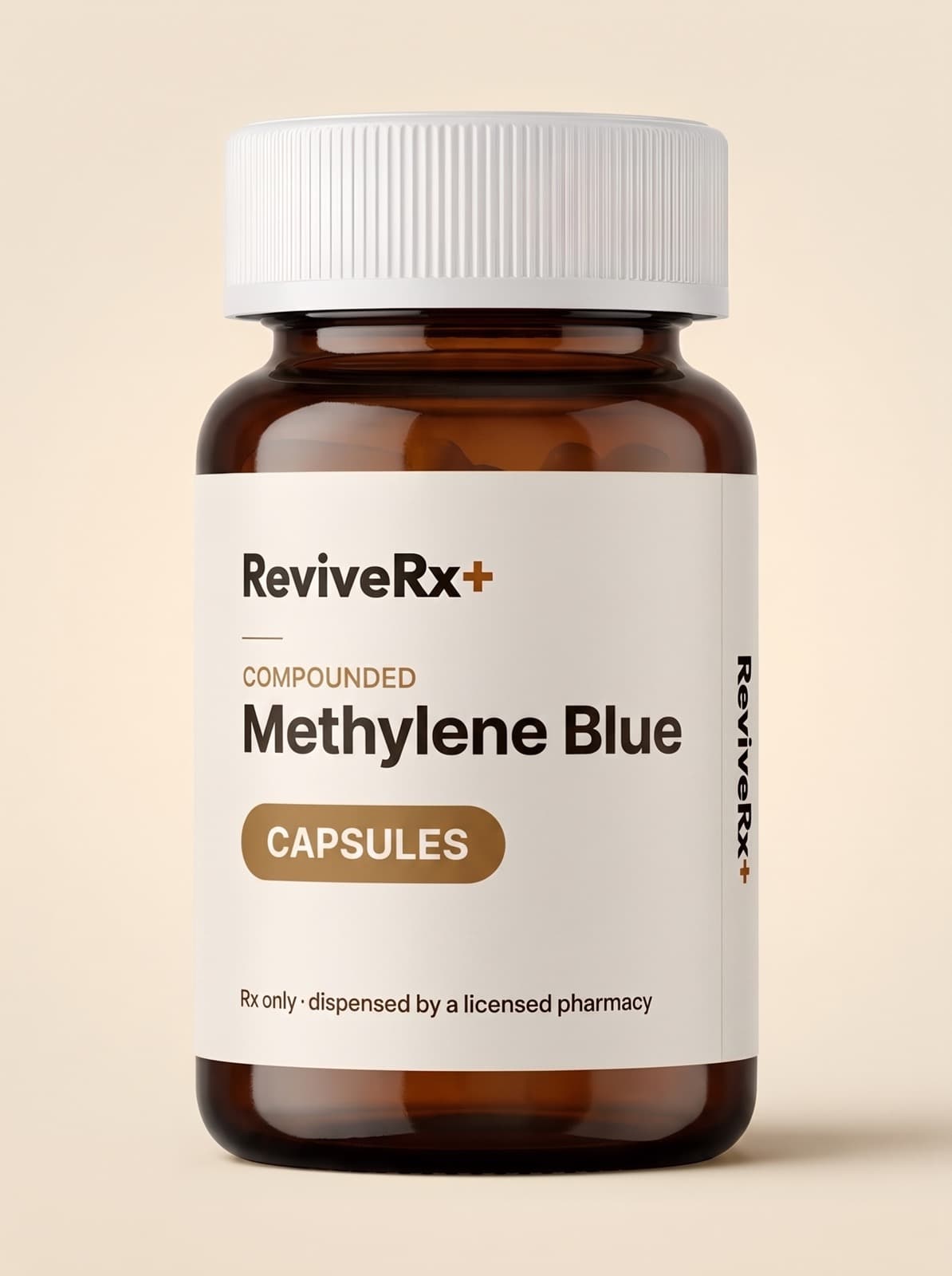
Compounded Methylene Blue
Compounded — daily oral capsule
A compounded low-dose oral capsule of methylene blue, a dye that shuttles electrons inside mitochondria and inhibits an enzyme that clears serotonin. Approved only as an intravenous antidote; oral use is off-label.
Compounded methylene blue is prepared for you by a licensed 503A compounding pharmacy and is not FDA-approved. It uses the active ingredient of ProvayBlue but is not that product, and the FDA has not reviewed it for safety, effectiveness or quality. ProvayBlue is an intravenous treatment for acquired methemoglobinemia; taking methylene blue by mouth for any other purpose is an off-label use, which your provider will explain.
From$129/mo$32 consultation included, not refunded · medication and shipping if prescribed
Choose your plan
4-week supply
Price
$129for a 4-week supply, if prescribed
Includes your $32 provider consultation (non-refundable). If your provider decides treatment isn’t appropriate, the medication portion is refunded automatically.
- Your provider confirms the dose. If they start you on a lower step, we refund the difference; if they choose a higher one within the same plan, the price you paid stands.
Adding to cart books a provider visit. You pay the shown total; the provider decides; the medication portion comes back automatically if they say no.
Questions
Will I definitely be prescribed this?
No — a consultation does not guarantee a prescription. A licensed provider reviews every medication you take, your G6PD status if known and your history, and prescribes only if it's appropriate for you. Oral use is off-label, and an antidepressant or a serotonergic painkiller rules it out outright. If it isn't right for you, we'll tell you why and the medication portion of your payment is refunded; the consultation fee is not.
I take an antidepressant — can I still take this?
No. Methylene blue inhibits the enzyme that clears serotonin, and combined with an SSRI, SNRI, MAOI or tricyclic it can cause serotonin syndrome, which can be fatal. The same applies to tramadol, meperidine, fentanyl, methadone, triptans, dextromethorphan, lithium, buspirone and St John's wort. Do not stop an antidepressant to qualify — talk to the prescriber who manages it.
Why does it turn urine blue?
Because it is a dye, and the kidneys excrete it unchanged. It is the same molecule laboratories use as a stain and hospitals use intravenously to treat methemoglobinemia. The colour is harmless, but it can interfere with urine tests and pulse-oximeter readings, so tell any clinician you see.
How it works
Methylene blue is a dye first made in 1876 that works as a redox cycler: it accepts electrons from the cell's NADH-dependent enzymes and hands them on. At the intravenous doses of the approved product, that is how it converts methemoglobin — haemoglobin that has lost the ability to carry oxygen — back to a working form, which is its one approved use. Inside mitochondria the same property lets it carry electrons between the complexes of the respiratory chain, and that is the mechanism providers cite for low-dose oral use. It is also a reversible inhibitor of monoamine oxidase A, the enzyme that breaks down serotonin, which is why combining it with an antidepressant or certain opioids can cause serotonin syndrome, a potentially fatal reaction that carries a boxed warning on the approved product. The dose matters: low doses act as an electron carrier, high doses as an oxidant. Human outcome data for oral low-dose use comes from small, short studies and does not support any specific promise — we describe the mechanism here, not a result.
The full mechanismA provider may consider it if
- Your provider has gone through every medication and supplement you take — the interaction list is the deciding factor with this one
- You are not taking an antidepressant, a migraine triptan, tramadol or any other serotonergic medicine, and have no plans to start one
- You accept that the evidence for oral low-dose use is early and that the point is a provider-led trial, not a promise
It won’t be prescribed if
- Anyone taking an SSRI, SNRI, MAOI, tricyclic antidepressant, lithium, buspirone, a triptan, tramadol, meperidine, fentanyl, methadone, dextromethorphan or St John's wort — serotonin syndrome is a hard stop, and do not stop an antidepressant to qualify
- G6PD deficiency — the approved product is contraindicated because it can cause haemolytic anaemia
- A known severe hypersensitivity to methylene blue
- Pregnancy or breastfeeding, without provider review
- Anyone expecting a cognitive or memory result — that is not something we or the evidence promise
These are the same checks your provider runs in the visit. If one applies, they will tell you plainly — and the medication portion of what you paid comes back automatically.
What to expect
Days 1–3
Your urine turns blue or blue-green — expected and harmless, and stool can tint too. Tell any clinician who orders a urine test or uses a pulse oximeter that you take it, because the dye can interfere with both.
Weeks 1–4
Nausea, stomach upset or a headache are the common early experiences and usually settle. Any new medication — including an over-the-counter cough remedy — is checked with the care team before you take it.
Ongoing
Reviewed at check-ins like any prescription. Because the interaction risk never goes away, the medication review at each refill is not a formality.
Safety
Side effects, before you decide
Blue-green urine, and sometimes a bluish tint to stool or skin, is universal and harmless. Nausea, abdominal pain, diarrhoea, headache and dizziness are the common ones at low oral doses. The approved intravenous product also lists low potassium and magnesium, muscle jerks and seizure-like episodes. In people with G6PD deficiency it can destroy red blood cells. The serious risk is serotonin syndrome — agitation, racing heart, high temperature, muscle rigidity — when combined with antidepressants, certain opioids or other serotonergic drugs; the approved product carries a boxed warning for it and some reported cases were fatal. It can also give falsely low readings on a pulse oximeter.
- ProvayBlue (methylene blue) injection prescribing information, DailyMed, revised 2/2024 — boxed warning, indication, contraindications, warnings and adverse reactions
- Ginimuge PR, Jyothi SD. Methylene blue: revisited. Journal of Anaesthesiology Clinical Pharmacology, 2010;26(4):517–520 — pharmacology and mechanism review
Complete safety information is provided during your visit and with every prescription. This page is a summary, not a substitute for your provider's advice.
Also for longevity
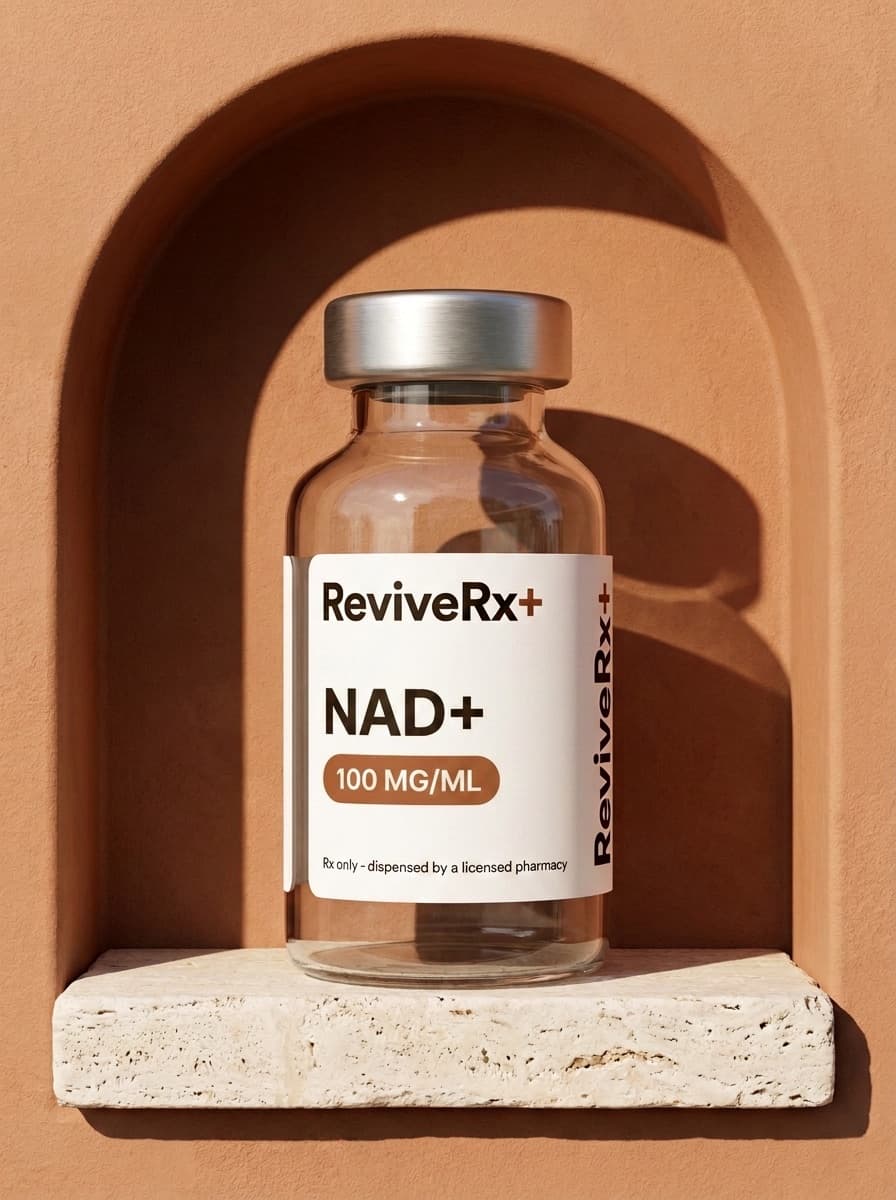 Compounded NAD+
From$229/mo$32 consultation included, not refunded · medication and shipping if prescribed
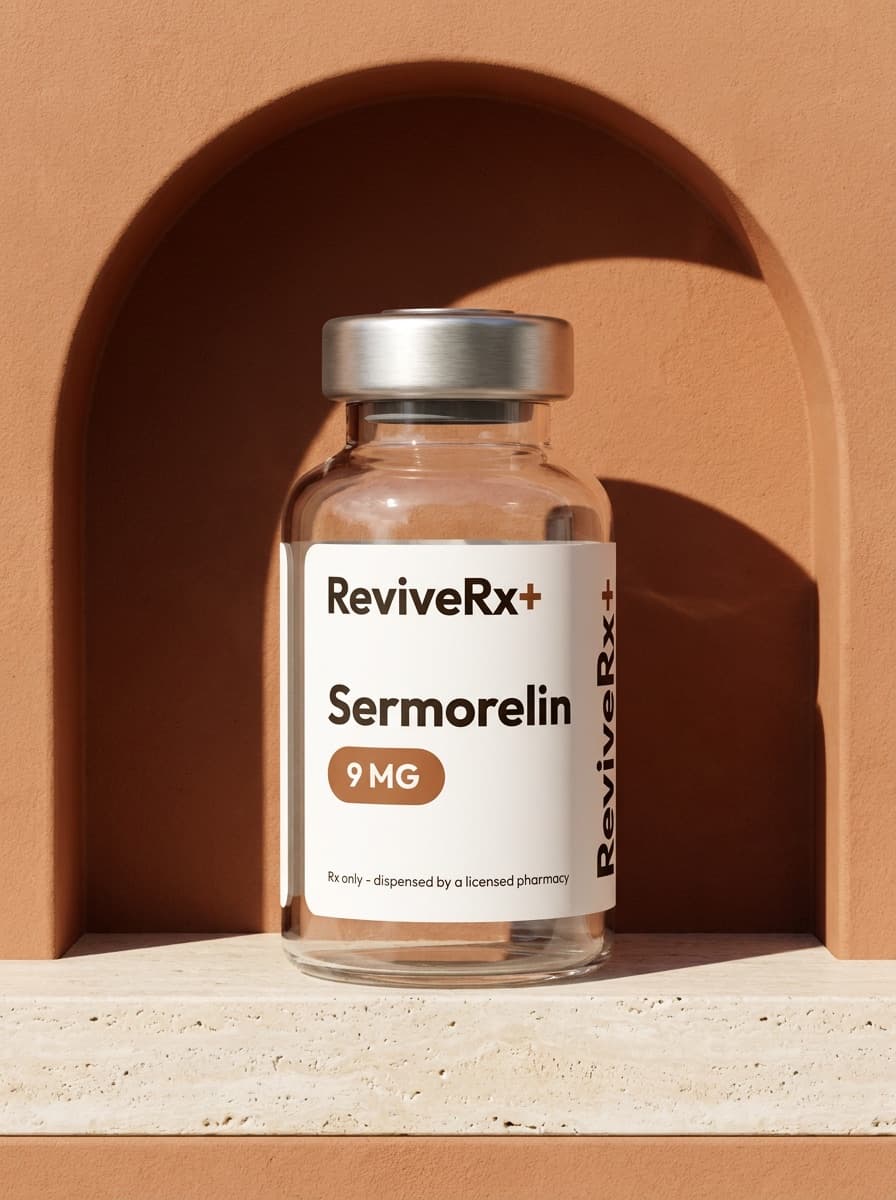 Compounded Sermorelin
From$209/mo$32 consultation included, not refunded · medication and shipping if prescribed
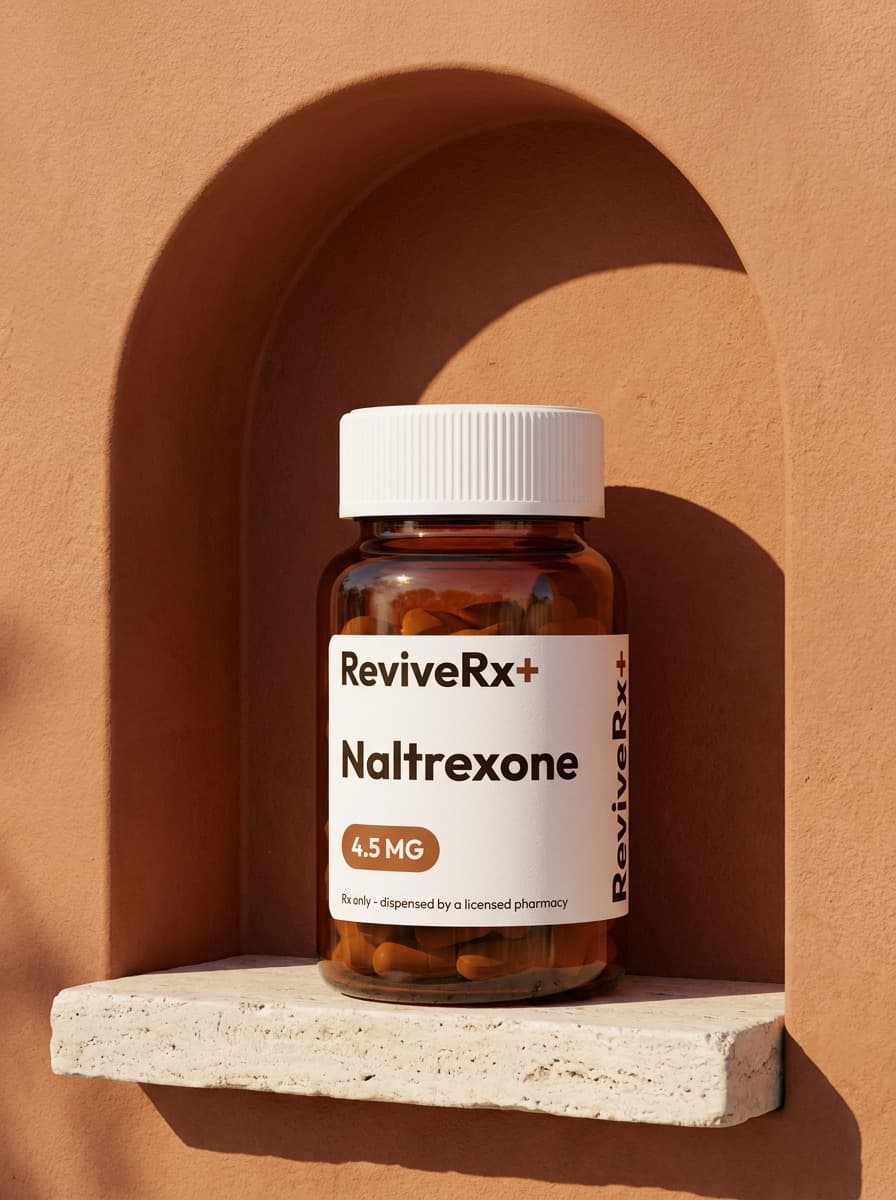 Compounded Low-Dose Naltrexone
From$169/mo$32 consultation included, not refunded · medication and shipping if prescribed
 Compounded Glutathione
From$209/mo$32 consultation included, not refunded · medication and shipping if prescribed
 Compounded Tesamorelin
From$229/mo$32 consultation included, not refunded · medication and shipping if prescribed
 Compounded B12 / Glutathione / NAD+ / Sermorelin Bundle
From$379/mo$32 consultation included, not refunded · medication and shipping if prescribed
See whether compounded methylene blue is right for you.
A licensed provider reviews your visit and decides. You receive medication only if prescribed, and that portion of your payment is refunded automatically if they say no.