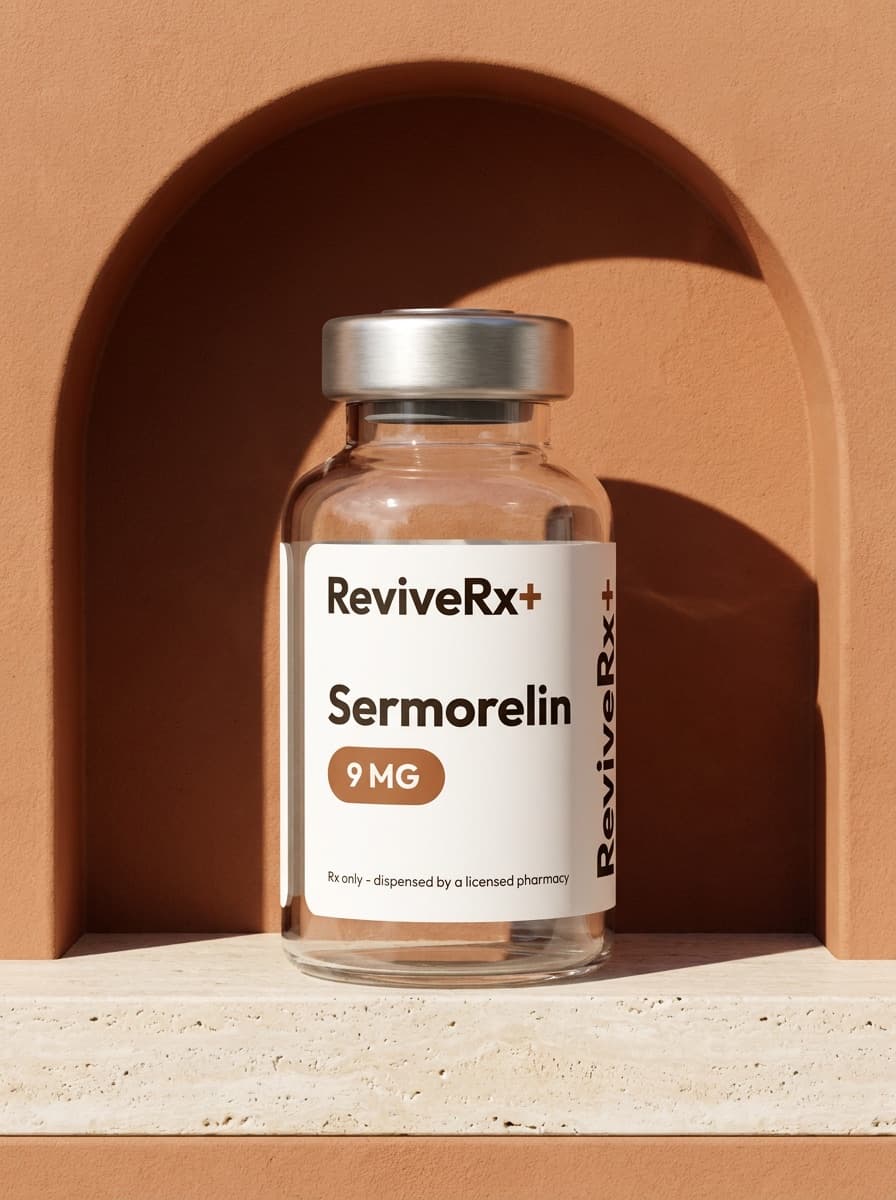
Compounded Sermorelin
Compounded — daily oral capsule
A daily oral capsule of sermorelin, a peptide that prompts the pituitary to release growth hormone, which a provider may prescribe only where they document a patient-specific need.
$209 4-week supply $32 consultation included, not refunded · medication and shipping if prescribed
Choose your option
4-week supply
Price
$209 for a 4-week supply, if prescribed
Includes your $32 provider consultation (non-refundable). If your provider decides treatment isn’t appropriate, the medication portion is refunded automatically.
Paying books a visit with a licensed provider, who decides whether to prescribe and which strength is appropriate. If nothing is prescribed, the medication portion is refunded automatically; a higher strength costs more only if you approve that charge.
How it works
Compounded sermorelin is prepared for you by a licensed compounding pharmacy in our clinical partner's network and is not FDA-approved. It is not a brand-name or generic product, and the FDA has not reviewed it for safety, effectiveness or quality. No FDA-approved sermorelin product has been sold in the US since the brand-name Geref was discontinued in 2008, for reasons unrelated to safety or effectiveness; sermorelin's standing as a compounding ingredient is under FDA review, and a prescriber may prescribe it only after attesting to a patient-specific need.
Sermorelin is a synthetic version of the first 29 amino acids of growth-hormone-releasing hormone (GHRH) — the fragment that carries its full activity. It signals the pituitary to release your own growth hormone, in your own pulsatile rhythm, subject to your body's own feedback loops. That feedback is the key difference from injecting growth hormone itself: your pituitary can still say no, which is why providers consider its safety profile more forgiving. Geref, the one sermorelin product the FDA ever approved, was a diagnostic and pediatric drug that left the market in 2008; the adult-longevity use rests on that mechanism and on small studies, not on a trial of outcomes in people like you. Geref was an injection, and the sources this page cites describe injected sermorelin. The pharmacy that fills this prescription prepares it as an oral capsule — 500 mcg, one a day — in every state we serve. Sermorelin is a peptide, and peptides taken by mouth are largely broken down in the gut; how much of a capsule reaches your bloodstream is not shown by those sources, and your provider will tell you that before prescribing it, not after.
The full mechanismWho it’s for
A provider may consider it when
- Recovery, sleep quality and body composition are your goals
- You want to work with your own hormone axis rather than override it
- You can take a capsule every day as the pharmacy's label directs, and you accept that the published work on sermorelin used injections
Reasons it may not be prescribed
- Active cancer, or a history of it, without your oncologist involved — growth signaling is not something to add casually
- Untreated thyroid or adrenal conditions, which blunt the axis it works through
- Pregnancy or breastfeeding, without provider review
- Anyone expecting bodybuilder-forum results — this is the conservative tool, and that's the point
These are the same checks your provider runs in the visit. If one applies, they will tell you plainly — and the medication portion of what you paid comes back automatically.
What to expect
Weeks 1–4
With injected sermorelin, sleep quality is typically the first thing people notice. The capsule dispensed here has not been studied that way in the sources this page cites, so any change — or none — is something to assess with your provider.
Months 2–3
Where recovery and composition changes are honestly assessed — anything faster is water and wishful thinking.
Important safety information
With injected sermorelin, injection-site reactions are the common ones, and flushing, headache and dizziness are reported; the sources this page cites do not describe the capsule's own side effects, so report anything new to the care team. Because it raises growth hormone through your own pituitary, the excess-GH risks of direct hormone injection are lower — but screening still matters, which is why a provider reviews your history first.
- Walker RF. Sermorelin: a better approach to management of adult-onset growth hormone insufficiency? Clinical Interventions in Aging, 2006;1(4):307–308 — a commentary on the mechanism, not a trial
- Federal Register, 2013-03-04 — FDA's determination that Geref (sermorelin acetate) was not withdrawn from sale for reasons of safety or effectiveness
Complete safety information is provided during your visit and with every prescription. This page is a summary, not a substitute for your provider's advice.
Questions
Will I definitely be prescribed this?
No — a consultation does not guarantee a prescription. Sermorelin's standing as a compounding ingredient is still under FDA review, so a licensed provider may prescribe it only where they can attest to a specific, patient-specific reason it is right for you. If they can't, we'll tell you why and the medication portion of your payment is refunded; the consultation fee is not.
Why a capsule, when sermorelin used to be injected?
Because a capsule is what the pharmacy that fills this prescription prepares, in every state we serve: 500 mcg, one a day. The published work on sermorelin used injections, and a peptide taken by mouth is largely broken down in the gut, so ask your provider what is known about the capsule before you decide.
Is this the same as taking HGH?
No — and the difference matters. Injected growth hormone overrides your body's feedback loops; sermorelin asks your pituitary to do the releasing, and your own regulation stays in charge. That's why it's the version a cautious provider reaches for.
Also for longevity
$32 consultation included, not refunded · medication and shipping if prescribed
 Compounded NAD+
$229 4-week supply
 Compounded Low-Dose Naltrexone
$169 4-week supply
 Compounded Glutathione
$209 4-week supply
 Compounded Tesamorelin
$229 4-week supply
 Compounded Methylene Blue
$129 4-week supply
 Compounded B12 / Glutathione / NAD+ / Sermorelin Bundle
$379 4-week supply
$32 consultation included, not refunded
See whether Compounded Sermorelin is right for you.
A licensed provider reviews your visit and decides. You receive medication only if prescribed, and that portion of your payment is refunded automatically if they say no.