Loading treatment…
Compounded — not FDA-approvedPrescription only
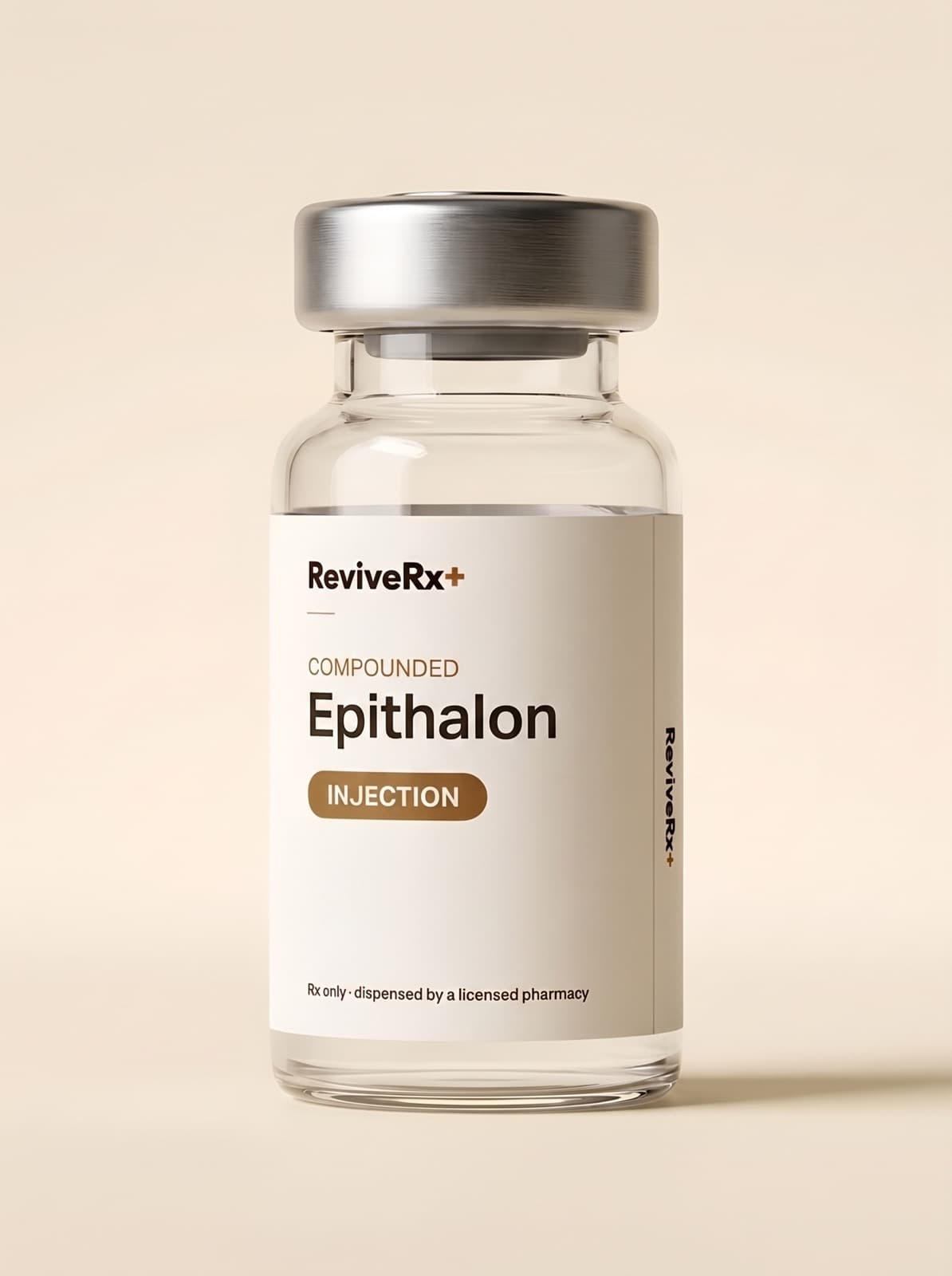
Compounded Epithalon
Compounded — self-administered injection, in courses
A compounded injection of a four-amino-acid peptide modelled on a pineal-gland extract, studied in cell lines for telomerase activity. The human record is small and old; a provider decides whether it fits.
Epithalon (epitalon) is not an FDA-approved drug and is not currently on FDA's list of substances that may be used in compounding. FDA's advisory committee voted for its inclusion on 2026-07-24; that vote is a recommendation and rulemaking is pending, so its status may change and this treatment may be withdrawn. Your provider decides whether it is appropriate for you.
From$349/12 wk$32 consultation included, not refunded · medication and shipping if prescribed
Choose your plan
12-week supply
Price
$349for a 12-week supply, if prescribed
Includes your $32 provider consultation (non-refundable). If your provider decides treatment isn’t appropriate, the medication portion is refunded automatically.
- Your provider confirms the dose. If they start you on a lower step, we refund the difference; if they choose a higher one within the same plan, the price you paid stands.
Adding to cart books a provider visit. You pay the shown total; the provider decides; the medication portion comes back automatically if they say no.
Questions
Will I definitely be prescribed this?
No. A consultation does not guarantee a prescription. A licensed provider reviews your history at the visit and decides whether this is appropriate for you; because the substance is not on FDA's list for compounding and the human data is thin, many providers will reasonably decline. If they decline, the medication portion of what you paid is refunded automatically; the consultation fee is not.
Is this FDA-approved?
No. Compounded drugs are not FDA-approved, and epithalon is not the active ingredient of any approved product either. In July 2026 FDA's advisory committee voted, narrowly and against its own staff's advice, to recommend adding it to the list of substances pharmacies may compound; until FDA finishes its rulemaking it is not on that list.
Could this be withdrawn?
Yes. Its regulatory status can change at any time: FDA's advisory committee vote is a recommendation, FDA's own rulemaking decides the list, a state pharmacy board can act on its own, and our partner pharmacy can stop preparing it. If any of that happens we stop offering it, tell you, and refund the medication portion of any order the pharmacy can no longer fill.
Does it lengthen telomeres?
In cell cultures, yes — that is a reproducible laboratory finding. In people, nobody has measured it after injections in a study a regulator would accept. We describe the mechanism because it is real; we do not describe a result because there is none to describe.
Why is the human evidence so thin after thirty years?
Because most of it was generated by one research group, much of it on the pineal extract rather than the synthetic peptide, and published in journals and formats that do not allow the methods to be checked. That is not an accusation — it is the reason FDA's staff could not endorse it, and the reason your provider cannot promise you anything from it.
How it works
Epithalon — epitalon in most of the literature — is the tetrapeptide Ala-Glu-Asp-Gly, synthesised in St Petersburg in the 1990s to mimic the amino-acid composition of Epithalamin, an extract of bovine pineal gland. The pineal gland makes melatonin and sets the sleep–wake rhythm, which is why the compound was nominated to FDA for insomnia. The laboratory claim that made it famous is different: in cultured human cells it increases expression of hTERT, the enzyme that rebuilds telomeres — the protective caps on chromosomes that shorten with each cell division — and a 2025 study reproduced dose-dependent telomere lengthening in normal cell lines. Whether any of that happens in a living person after a subcutaneous injection is unknown. The human evidence is a handful of Russian studies from the 1990s and 2000s, mostly of the pineal extract rather than the peptide, without the design or reporting a regulator would accept; FDA's own staff told the committee the safety and effectiveness data were lacking, and the committee recommended it anyway, by a two-vote margin.
The full mechanismA provider may consider it if
- Sleep rhythm and general resilience are what you are working on with a provider, and you want the honest version of what this can and cannot show
- You are comfortable with a short course of subcutaneous injections rather than a daily medication
- You understand that a telomere finding in a dish is not a result in you
It won’t be prescribed if
- Active cancer, or a history of it, without your oncologist involved — telomerase activation is the mechanism cancer cells use to keep dividing, and that is exactly the concern
- Pregnancy, breastfeeding or trying to conceive
- A sleep problem that has not been evaluated — loud snoring, gasping in sleep or daytime sleepiness need a diagnosis, not a peptide
- Anyone expecting a treatment for ageing — nothing here has been shown to change how a person ages
- Under 18
These are the same checks your provider runs in the visit. If one applies, they will tell you plainly — and the medication portion of what you paid comes back automatically.
What to expect
Weeks 1–2
Injection-site redness or tenderness is the common early experience. Some people report drowsiness or vivid dreams in the first days.
End of a course
Human outcome data is limited: the small older studies reported sleep and hormone changes that cannot be verified from their published methods, so your provider will ask what you notice rather than promise anything.
Ongoing
Courses are reviewed at check-ins. Its regulatory status can change — rulemaking on the July 2026 vote is pending — and if it does we stop offering it and tell you.
Safety
Side effects, before you decide
Injection-site redness, tenderness or bruising are the common ones. Headache, drowsiness and vivid dreams are reported by people using it for sleep. Because the human studies are small, old and mostly of a related extract, the true rate of anything is unknown; human outcome data is limited, and long-term safety data — including whether stimulating telomerase over years matters — does not exist.
- Araj SK, Brzezik J, Mądra-Gackowska K, Szeleszczuk Ł. Int J Mol Sci 2025;26(6):2691 — overview of epitalon, the pineal tetrapeptide Ala-Glu-Asp-Gly, its origin in the Epithalamin extract and its proposed actions
- Al-Dulaimi S, Thomas R, Matta S, Roberts T. Biogerontology 2025;26(5):178 — epitalon lengthens telomeres in human cell lines through hTERT and telomerase upregulation
- Khavinson VKh, Morozov VG. Neuro Endocrinol Lett 2003;24(3-4):233–240 — the pineal extract Epithalamin (not the peptide) in 266 elderly people over 6–8 years; cited for what the human record consists of, not as evidence of an outcome
Complete safety information is provided during your visit and with every prescription. This page is a summary, not a substitute for your provider's advice.
Also for peptides
 Compounded CJC-1295 / Ipamorelin
From$199/mo$32 consultation included, not refunded · medication and shipping if prescribed
 Compounded Tesamorelin / Ipamorelin
 Compounded MOTS-c
From$239/mo$32 consultation included, not refunded · medication and shipping if prescribed
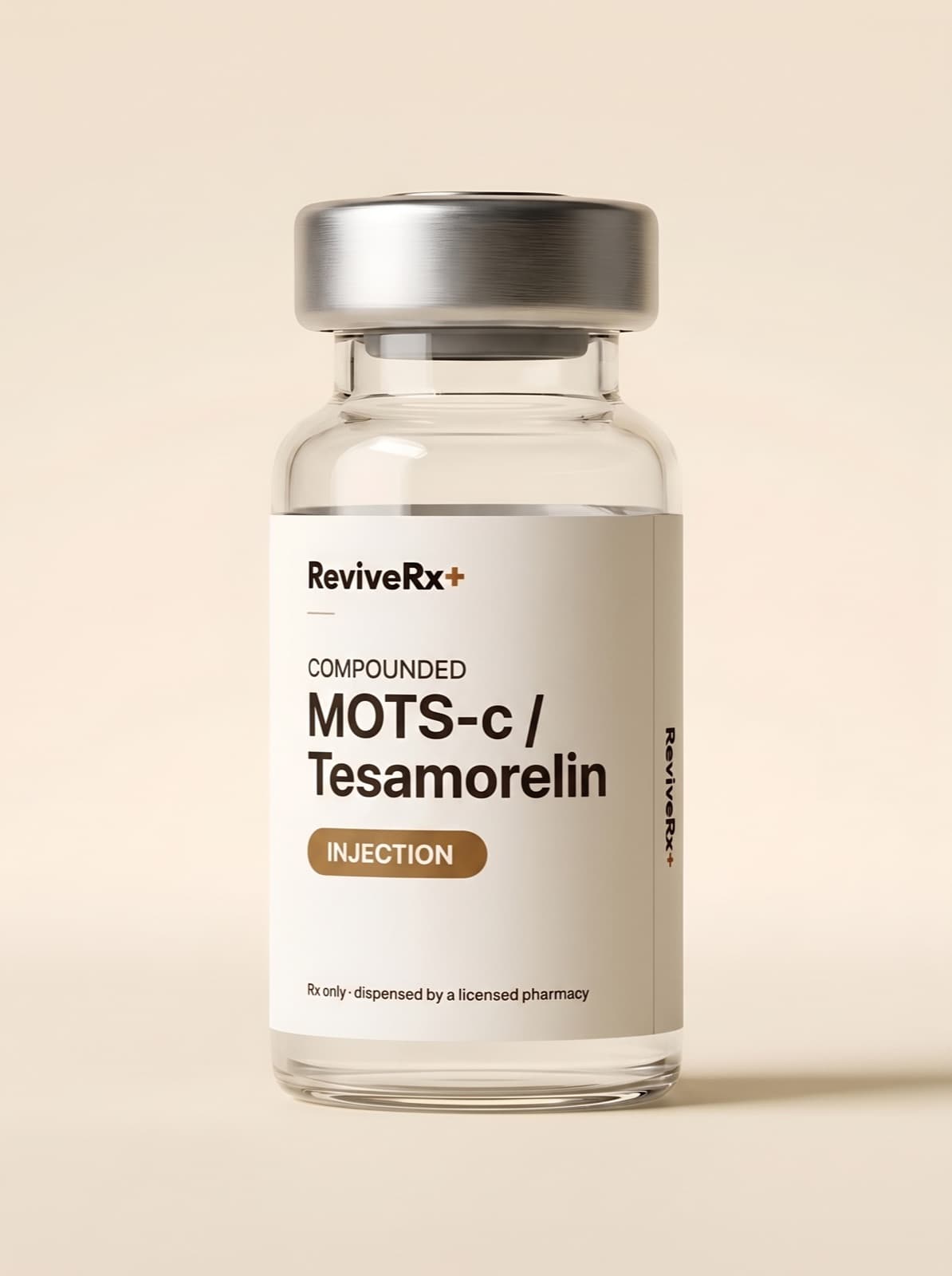 Compounded MOTS-c / Tesamorelin
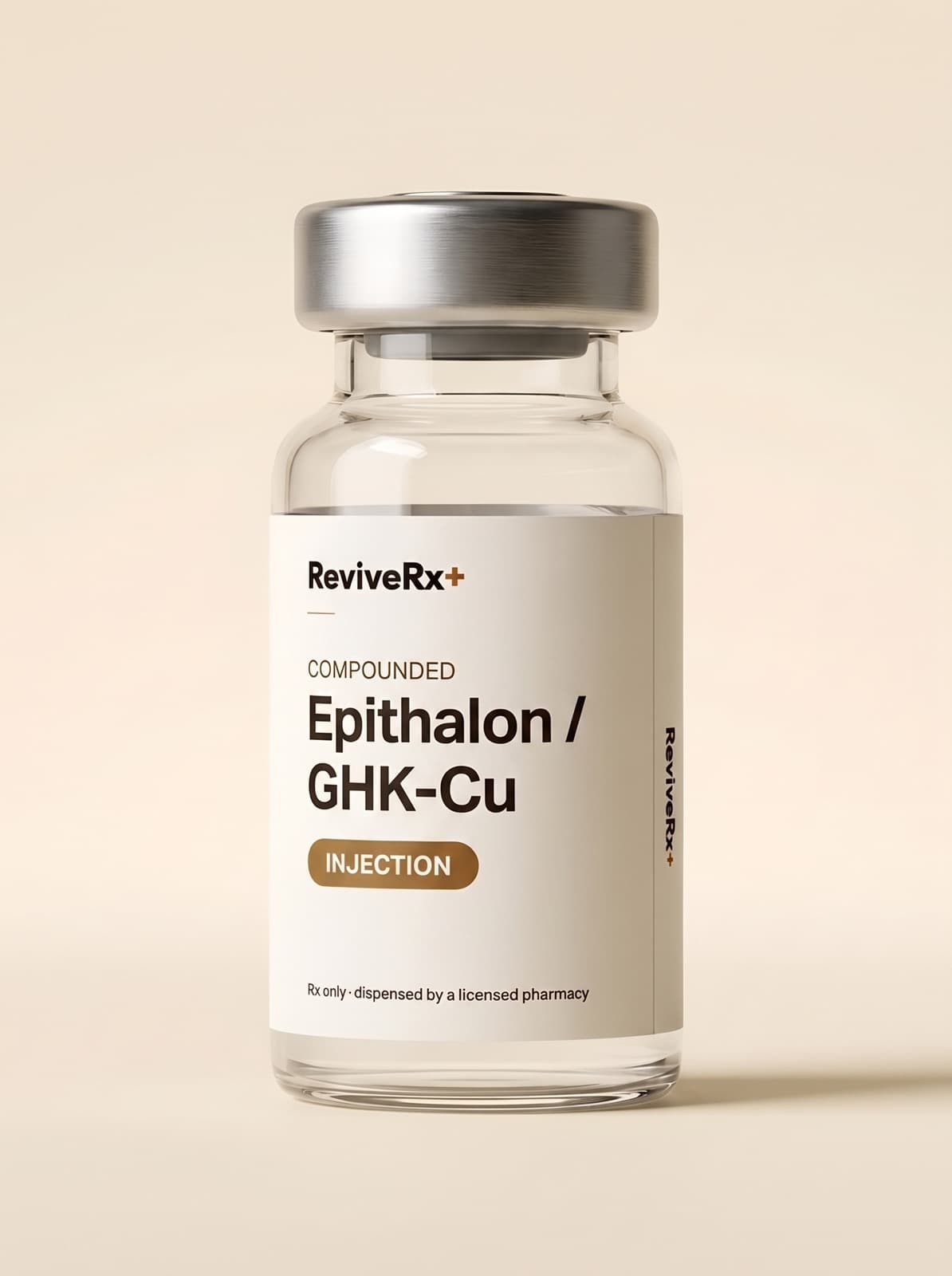 Compounded Epithalon / GHK-Cu
From$219/mo$32 consultation included, not refunded · medication and shipping if prescribed
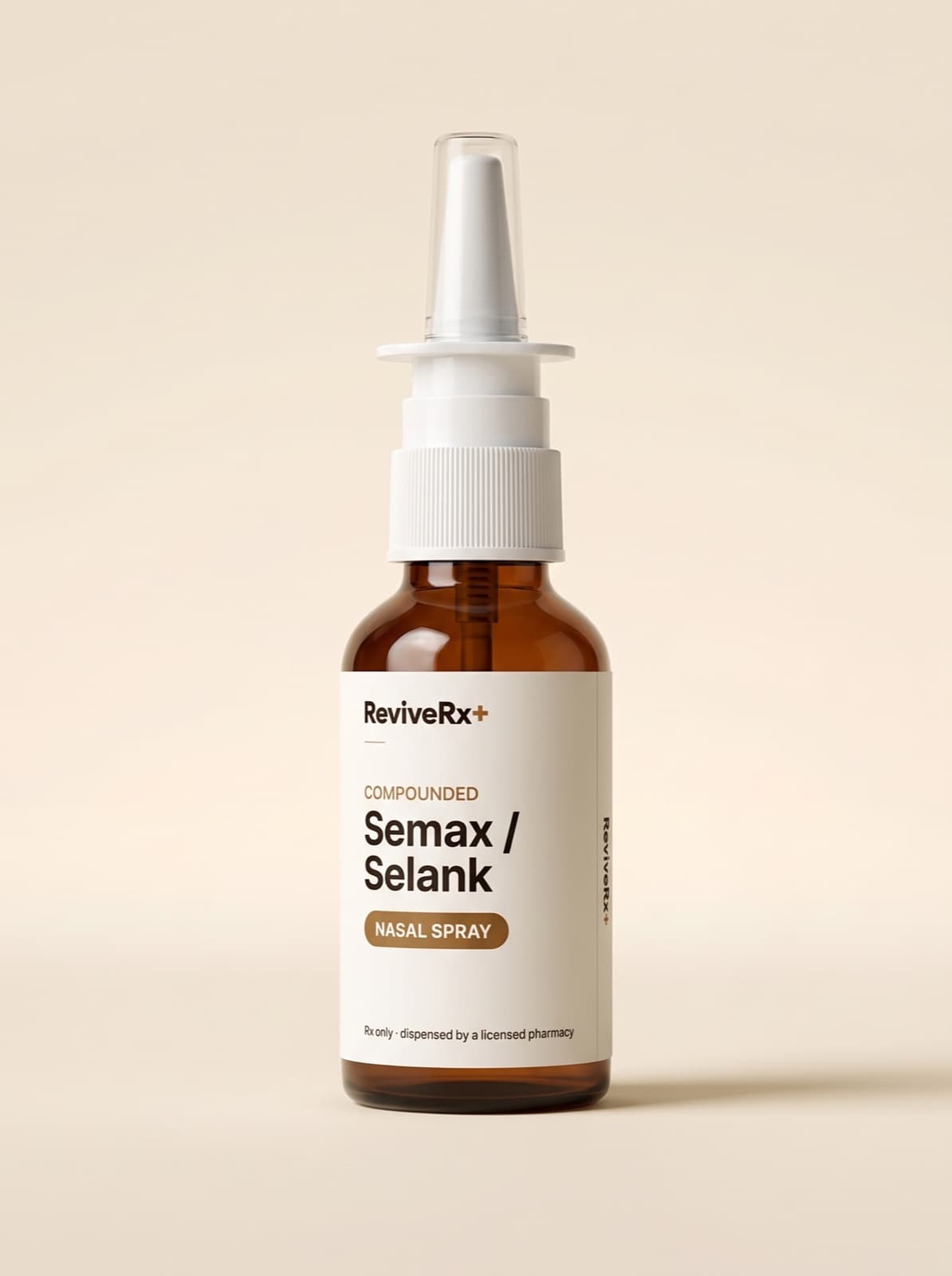 Compounded Semax / Selank
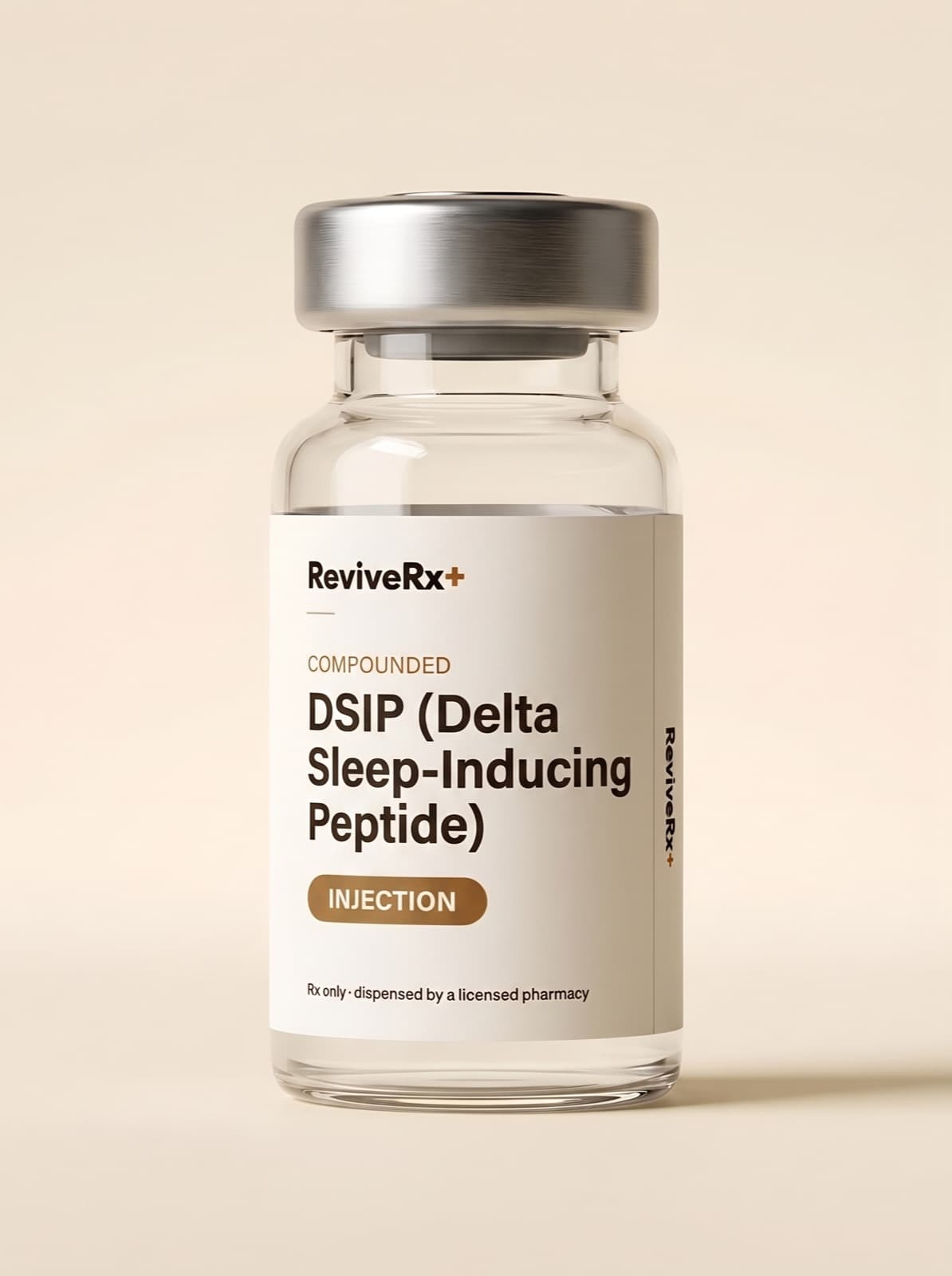 Compounded DSIP (Delta Sleep-Inducing Peptide)
 Compounded Thymosin Alpha-1
 Compounded Pinealon / PE-22-28 / Selank
See whether compounded epithalon is right for you.
A licensed provider reviews your visit and decides. You receive medication only if prescribed, and that portion of your payment is refunded automatically if they say no.