Loading treatment…
Compounded — not FDA-approvedPrescription only
Compounded Epithalon / GHK-Cu
Compounded — self-administered injection
A compounded injection pairing epithalon, a pineal-modelled tetrapeptide, with GHK-Cu, a natural copper-binding tripeptide. Injectable GHK-Cu is off FDA's compounding list, and the pair has no human data.
Epithalon (epitalon) and injectable GHK-Cu are not FDA-approved drugs and are not currently on FDA's list of substances that may be used in compounding. FDA's advisory committee voted for epithalon's inclusion on 2026-07-24 and has not yet reviewed injectable GHK-Cu (a meeting is planned before the end of February 2027); their status may change and this treatment may be withdrawn. Your provider decides whether it is appropriate for you.
From$219/mo$32 consultation included, not refunded · medication and shipping if prescribed
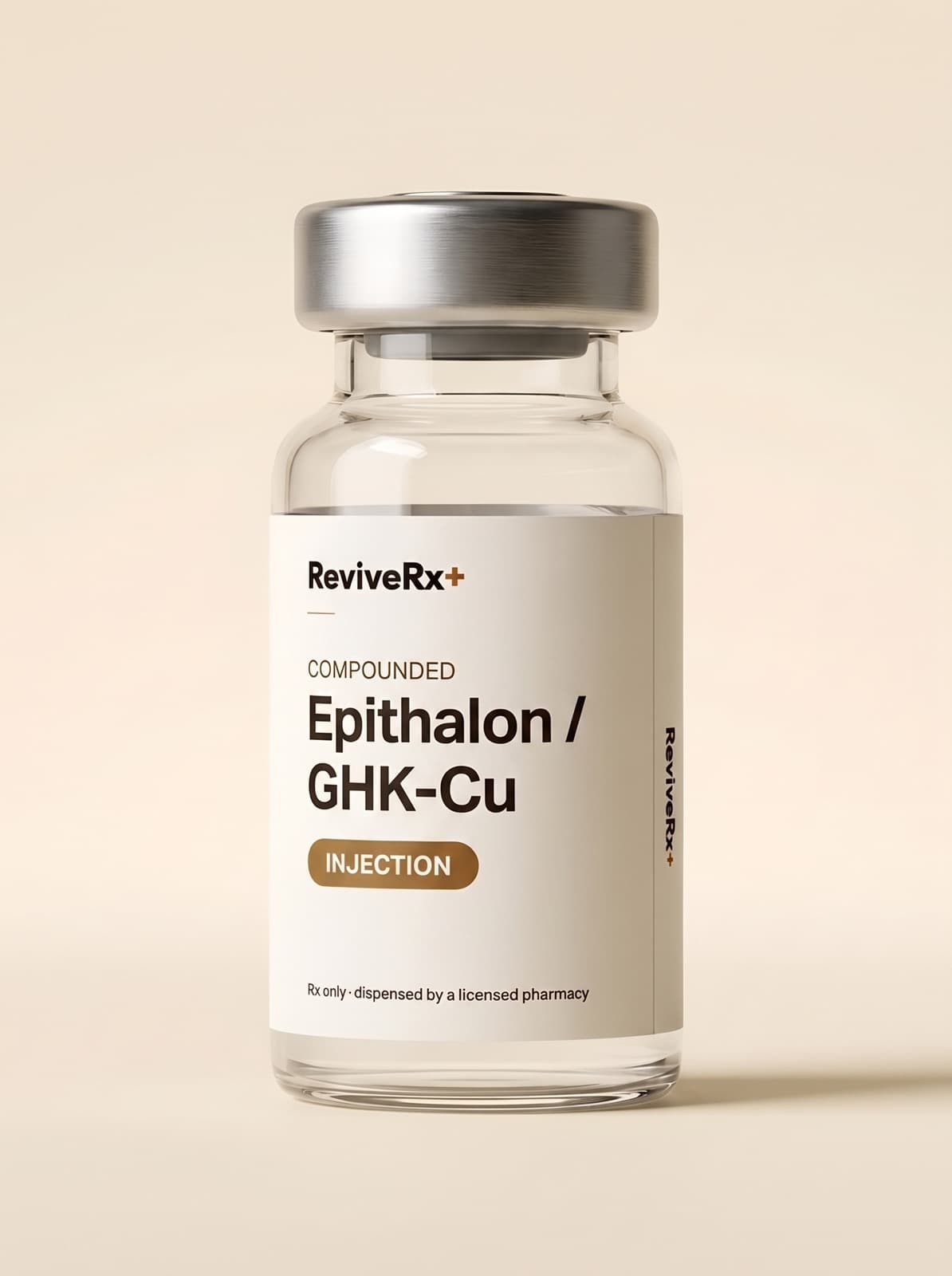
Choose your plan
Price
$219for a 4-week supply, if prescribed
Includes your $32 provider consultation (non-refundable). If your provider decides treatment isn’t appropriate, the medication portion is refunded automatically.
- Your provider confirms the dose. If they start you on a lower step, we refund the difference; if they choose a higher one within the same plan, the price you paid stands.
Adding to cart books a provider visit. You pay the shown total; the provider decides; the medication portion comes back automatically if they say no.
Questions
Will I definitely be prescribed this?
No. A consultation does not guarantee a prescription. A licensed provider reviews your history at the visit and decides whether this is appropriate for you; because the substance is not on FDA's list for compounding and the human data is thin, many providers will reasonably decline. If they decline, the medication portion of what you paid is refunded automatically; the consultation fee is not.
Is this FDA-approved?
No. Compounded drugs are not FDA-approved, and neither epithalon nor GHK-Cu is the active ingredient of any approved product. Epithalon has a favourable advisory vote from July 2026 with rulemaking pending; GHK-Cu is allowed in compounding only for non-injectable routes, and this product is injected. FDA has not reviewed the combination for safety, effectiveness or quality.
Could this be withdrawn?
Yes. Its regulatory status can change at any time: FDA's advisory committee vote is a recommendation, FDA's own rulemaking decides the list, a state pharmacy board can act on its own, and our partner pharmacy can stop preparing it. If any of that happens we stop offering it, tell you, and refund the medication portion of any order the pharmacy can no longer fill.
Isn't GHK-Cu allowed in compounding?
Only for non-injectable routes — creams, serums and the like. FDA's May 2026 list says so in those words, because the nominator withdrew the injectable route, and FDA has said it intends to bring GHK-Cu to its advisory committee before the end of February 2027. This product is injected, so it sits outside that allowance until FDA says otherwise.
What does the copper do?
GHK carries a copper ion, and copper is a cofactor for the enzymes that cross-link collagen and elastin — which is the proposed basis of its wound-healing and skin effects. That chemistry is well described for topical use. Whether injecting it does anything useful, or anything harmful, has not been studied.
How it works
Epithalon is the tetrapeptide Ala-Glu-Asp-Gly, modelled on a bovine pineal extract; in cultured human cells it raises expression of the telomere-rebuilding enzyme hTERT, and it was nominated to FDA for insomnia. GHK-Cu is glycyl-histidyl-lysine bound to a copper ion — a fragment of larger proteins that circulates naturally in plasma and declines with age, and which in laboratory and wound-healing work stimulates collagen and glycosaminoglycan turnover and shifts the expression of a large number of genes toward repair. Almost all of that evidence is for topical or local use on skin and wounds, which is why FDA's list allows GHK-Cu in compounding for non-injectable routes only; the injectable route was withdrawn from the nomination in April 2026 and awaits its own advisory review. The pairing is a longevity-protocol idea — a pineal signal plus a repair peptide — with no study of the two together, in people or animals. A provider who prescribes it is reasoning from two separate mechanisms.
The full mechanismA provider may consider it if
- Skin, recovery and sleep rhythm are what you are working on with a provider, and you want the honest version of what each ingredient has and has not shown
- You are comfortable with subcutaneous self-injection after instruction
- You understand that injectable GHK-Cu sits outside the allowance FDA gives the topical form, and that the combination has no data
It won’t be prescribed if
- Active cancer, or a history of it, without your oncologist involved — telomerase activation and repair signalling are both things you do not want near a tumour
- Pregnancy, breastfeeding or trying to conceive
- Wilson's disease or any other disorder of copper handling — GHK-Cu delivers copper
- Anyone expecting a treatment for ageing — nothing here has been shown to change how a person ages
- Under 18
These are the same checks your provider runs in the visit. If one applies, they will tell you plainly — and the medication portion of what you paid comes back automatically.
What to expect
Weeks 1–2
Injection-site redness or tenderness is the common early experience; some people report drowsiness or vivid dreams from the epithalon component.
Weeks 4–12
Human outcome data is limited to none for the pair. Your provider will ask what you notice — skin, recovery, sleep — rather than promise a timeline, because there is no trial to borrow one from.
Ongoing
Reviewed at check-ins. Two separate regulatory reviews are pending — epithalon's rulemaking and GHK-Cu's advisory meeting — and if either changes its status we stop offering it and tell you.
Safety
Side effects, before you decide
Injection-site redness, pain, tenderness or bruising are the common ones. Headache, drowsiness and vivid dreams are reported with epithalon. GHK-Cu's safety record is for creams and wound dressings; injected, its effects across the body — including what delivering copper systemically does over months — are uncharacterised. Human outcome data is limited, and long-term safety data for the combination does not exist.
- Pickart L, Margolina A. Int J Mol Sci 2018;19(7):1987 — regenerative and protective actions of the GHK-Cu peptide in the light of gene-expression data
- Pickart L, Vasquez-Soltero JM, Margolina A. Biomed Res Int 2015;2015:648108 — GHK as a modulator of cellular pathways in skin regeneration; plasma GHK declines with age
- Araj SK, Brzezik J, Mądra-Gackowska K, Szeleszczuk Ł. Int J Mol Sci 2025;26(6):2691 — overview of epitalon
- Al-Dulaimi S, Thomas R, Matta S, Roberts T. Biogerontology 2025;26(5):178 — epitalon and telomere length in human cell lines
Complete safety information is provided during your visit and with every prescription. This page is a summary, not a substitute for your provider's advice.
Also for peptides
 Compounded CJC-1295 / Ipamorelin
From$199/mo$32 consultation included, not refunded · medication and shipping if prescribed
 Compounded Tesamorelin / Ipamorelin
 Compounded MOTS-c
From$239/mo$32 consultation included, not refunded · medication and shipping if prescribed
 Compounded MOTS-c / Tesamorelin
 Compounded Epithalon
From$349/12 wk$32 consultation included, not refunded · medication and shipping if prescribed
 Compounded Semax / Selank
 Compounded DSIP (Delta Sleep-Inducing Peptide)
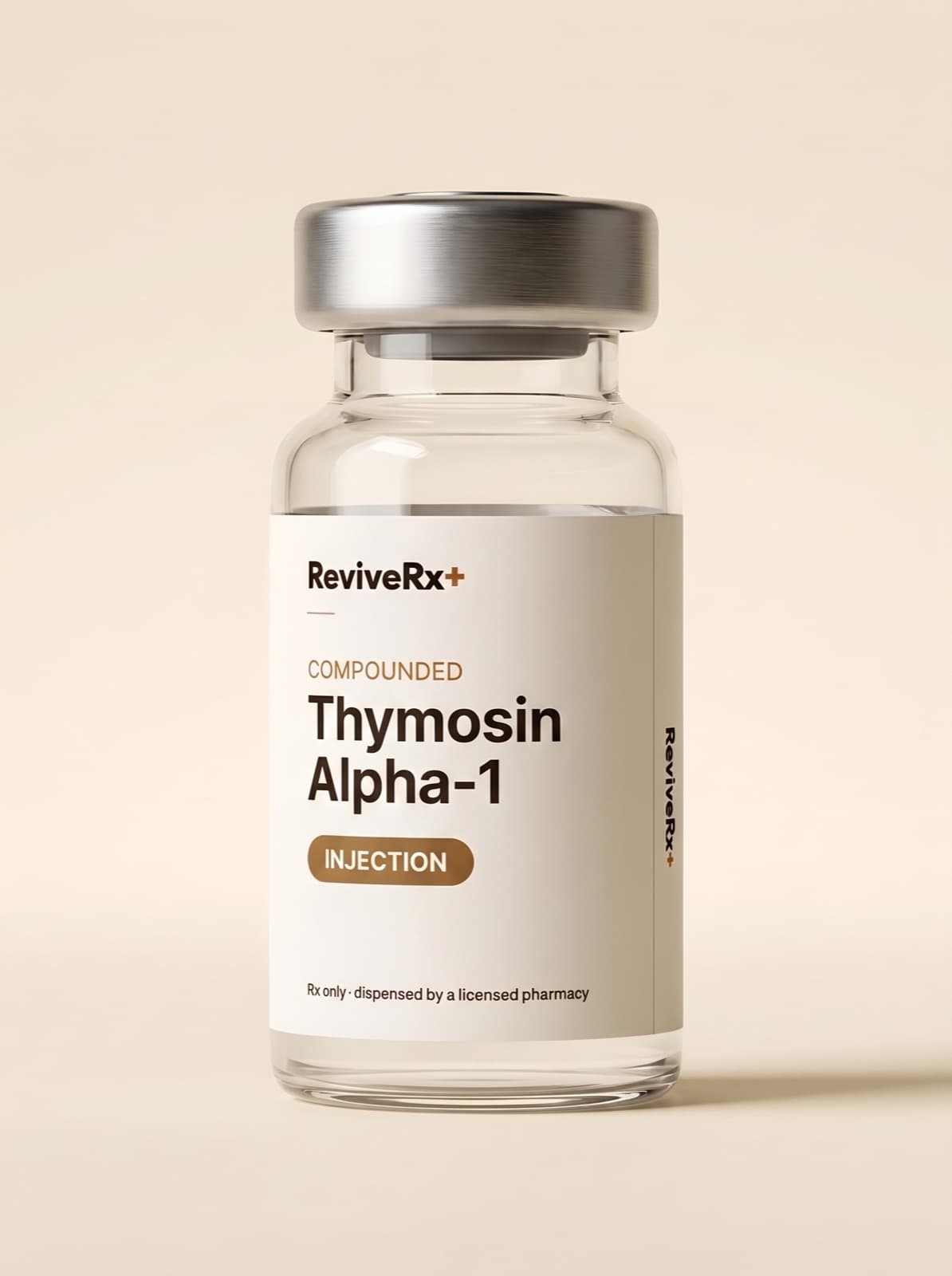 Compounded Thymosin Alpha-1
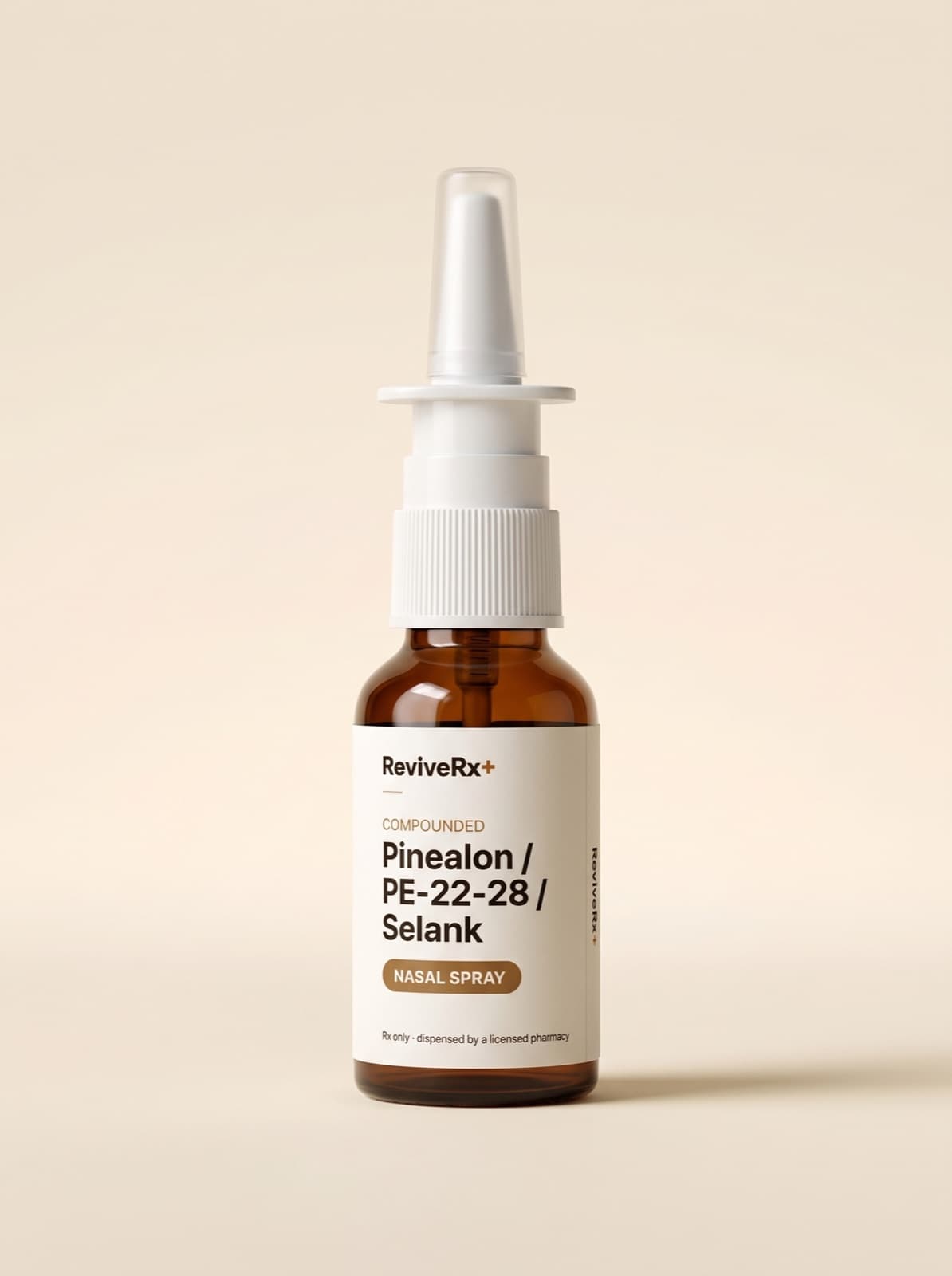 Compounded Pinealon / PE-22-28 / Selank
See whether compounded epithalon / ghk-cu is right for you.
A licensed provider reviews your visit and decides. You receive medication only if prescribed, and that portion of your payment is refunded automatically if they say no.